

For more than two decades, Central Arizona Project has been offering our annual CAP Award for Water Research, recognizing excellence in graduate and undergraduate water research.
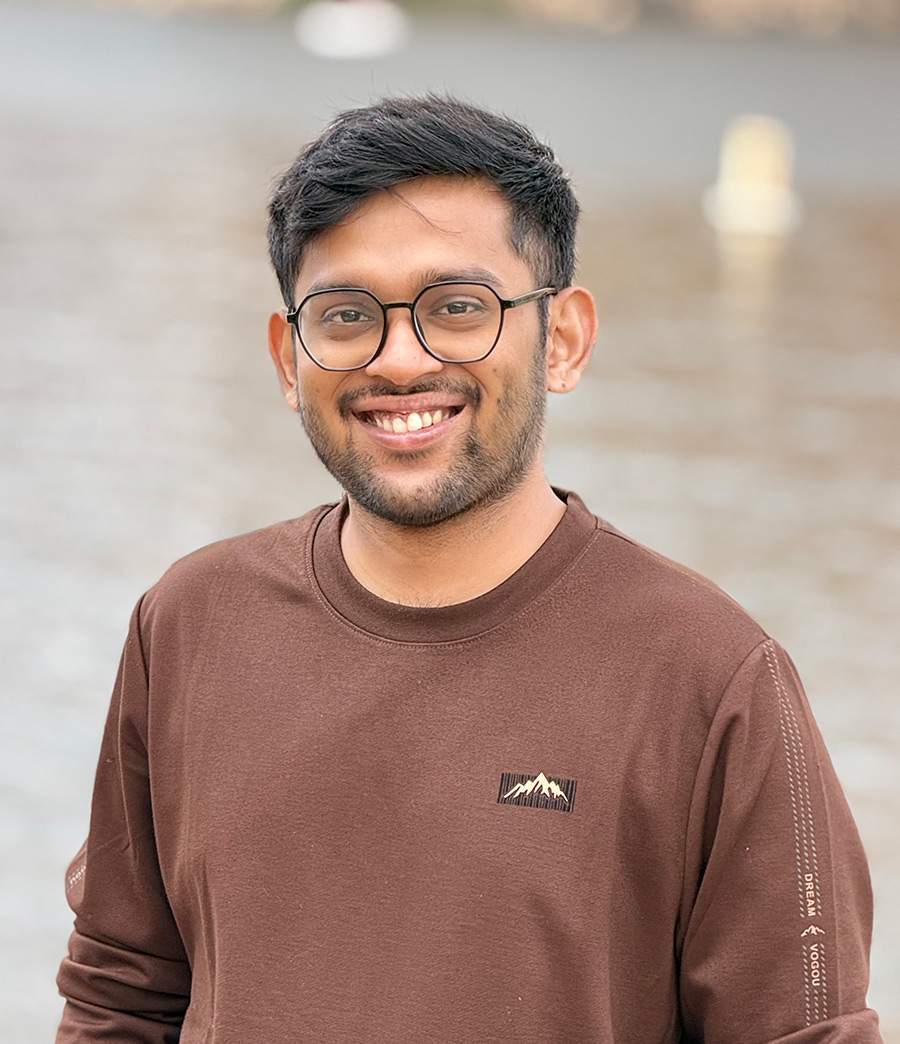
Here, we’ll check out the research produced by first-place winner, first-place winner, Md Rayhan.
First place: Mapping Groundwater Storage Anomalies at 1-km Resolution Across Arizona Within the Lower Colorado River Basin Using Downscaled GRACE Data
Abstract by Rayhan. Co-authors Abdelmohsen, Chandanpurkar, Gopalan, Famiglietti
Groundwater depletion across Arizona has intensified due to increasing dependence on groundwater under declining surface water availability and long-term Colorado River shortages.
But coarse-resolution GRACE and GRACE Follow-On (GRACE/FO) satellite observations (~25-km) cannot resolve the local-scale variability needed for effective management. We developed a novel machine learning downscaling framework to produce high-resolution (1-km) groundwater storage anomalies (GWSA) from GRACE terrestrial water storage data for Arizona (2002-2023).
After testing different model configurations, we demonstrate that cumulative predictors improve the performance of testing data to r = 0.84. Multiple machine learning models were tested for GRACE downscaling, with the best-performing model selected for Arizona. The study also found that conventional temporal train–test splitting performed poorly because of strong hydroclimatic non-stationarity and accelerated groundwater decline after 2012. Comparisons with 811 wells showed improved representation of localized groundwater variability in the downscaled product.
The 1-km product provides critical spatial detail of groundwater depletion within Arizona’s Active Management Areas (AMAs) for groundwater, underscoring the importance of local-scale analysis for Arizona water management. This physically based framework provides the first high-resolution, satellite-based groundwater monitoring capability for Arizona, enabling basin-to-farm-scale assessment of groundwater stress patterns critical to sustainable water resource planning in the Colorado River Basin.
About the Student

Md Rayhan is a PhD student in the School of Sustainable Engineering and the Built Environment (SSEBE) at Arizona State University. He holds a B.Sc. in Water Resources Engineering from Bangladesh University of Engineering and Technology (BUET) and is a hydrologist who applies artificial intelligence and machine learning to remote sensing and hydrological data. His research focuses on satellite-based monitoring of water resources, particularly GRACE and GRACE-FO gravimetry, statistical downscaling and groundwater assessment in the arid Southwest United States. At ASU, he develops high-resolution, AI-driven frameworks to track groundwater depletion and inform water management in Arizona. He has also carried out project work in Bangladesh on hydrologic modeling and drought and flood analysis.
About the CAP Award for Water Research
The CAP Award for Water Research is intended to encourage and support water research by students in Arizona colleges and universities and to raise public awareness of water issues impacting central and southern Arizona and the Colorado River. Judging is conducted in a blind process by representatives of CAP’s popularly elected Board of Directors, CAP stakeholders and management, and other members of the water community. The first-place winner received $3,500 and second-place winners received $2,000. The research could drop a dent into the world of Arizona’s water supply research in the future.