

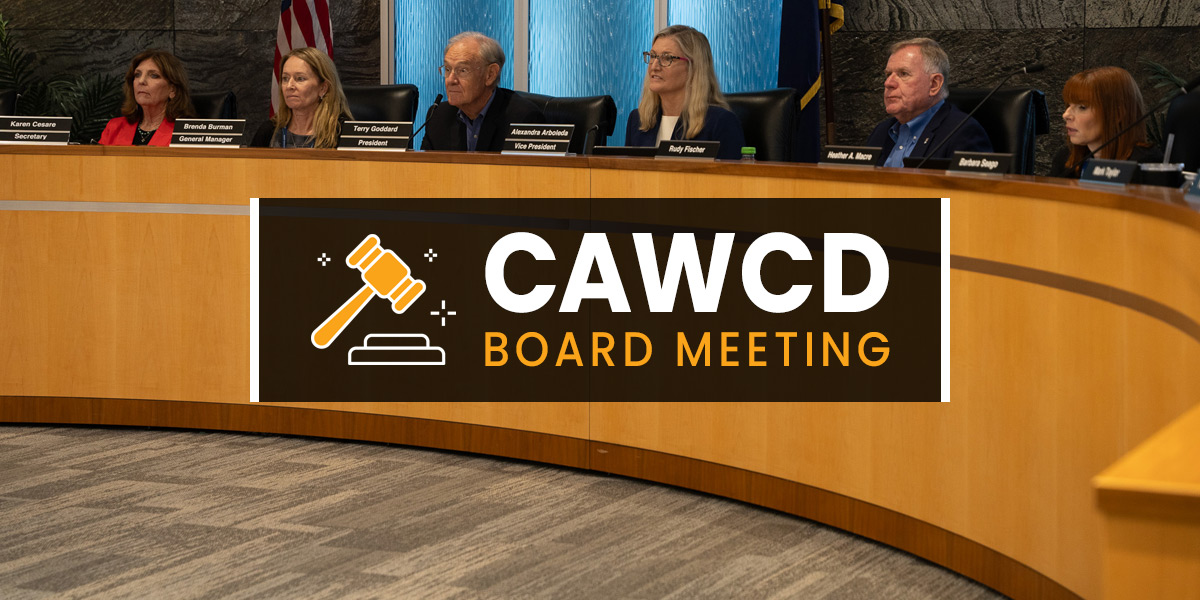
The Central Arizona Water Conservation District Board (CAWCD) met on Thursday, Dec. 4 at Central Arizona Project’s (CAP’s) north Phoenix headquarters.
The Board authorized an amendment to the agreement between the CAWCD and the Bureau of Reclamation regarding the 242 Wellfield and Pipeline Conservation Project.
Following a report from the CAGRD and Underground Storage Committee, the Board approved revisions to CAWCD’s Collection of CAGRD Annual Membership Dues Policy. These revisions sync the policy with amendments passed through the legislature earlier this year. The first revision outlines how CAGRD staff calculate the “projected groundwater use per lot” and the second clarifies when a newly enrolled Member Service Area must begin paying annual membership dues based on the timing of its enrollment.
The Board also authorized additional contracts for continued development of the Water Education Center, which broke ground in May and will be completed in early 2027.
On the consent agenda, the Board also approved:
- Construction Contract for Pilot Phase of Plant Generator Replacement Project at Hassayampa and Picacho Pumping Plants
- Construction Contract for Aqueduct Hydrology Improvements Project Phase 1 in Wittman Area
- Contract for Unit 2 Motor Rewind/ Core Restack at Brawley Pumping Plant
In addition, the Board heard presentations on:
- 2026 Annual Operating Plan and review of 2025 water operations
- Colorado River Conditions
- Lake Mead Conservation
The CAWCD Board of Directors is a popularly elected 15-member board. Ten members are from Maricopa County, four from Pima County and one from Pinal County. Members serve six-year, unpaid terms. The board typically meets publicly the first Thursday of each month to establish policy and set rates and taxes for CAP. Meetings are open to the public – in person and via livestream.
For additional details on the Dec. 4, 2025 board meeting, take a look at the agenda. Board minutes and video will be posted here, as well.

KRA: Public Trust, Partnerships & Leadership
Earning and preserving public trust, building and maintaining partnerships, and providing informed water management leadership