

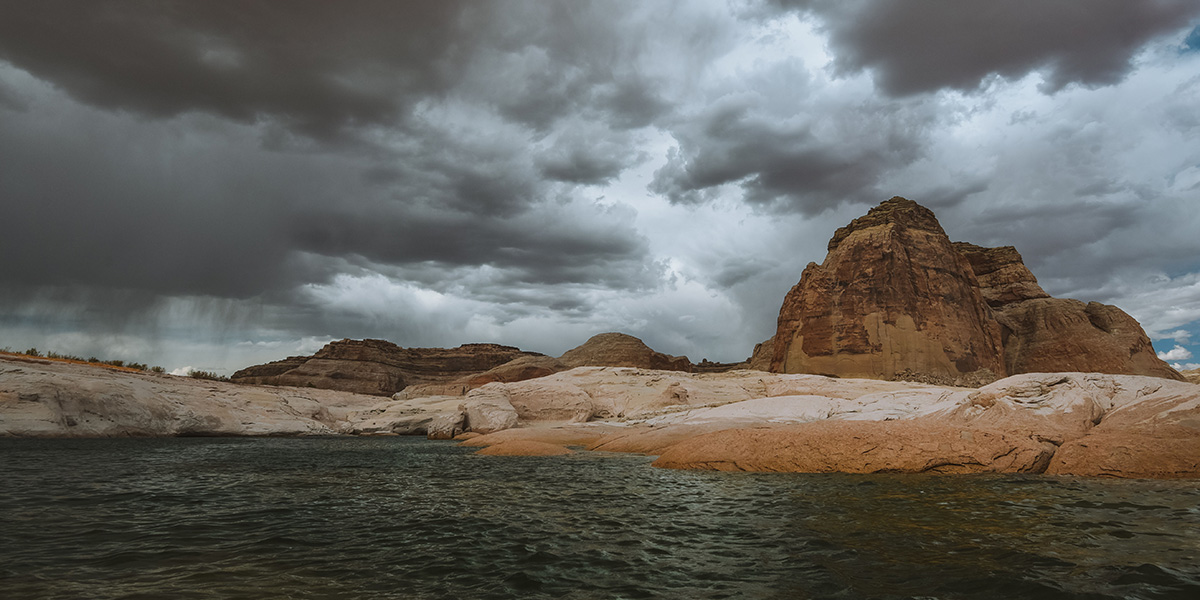
Arizonans have been talking about weather – particularly spectacular rains and flooding throughout the Valley and in northern Arizona in late October.
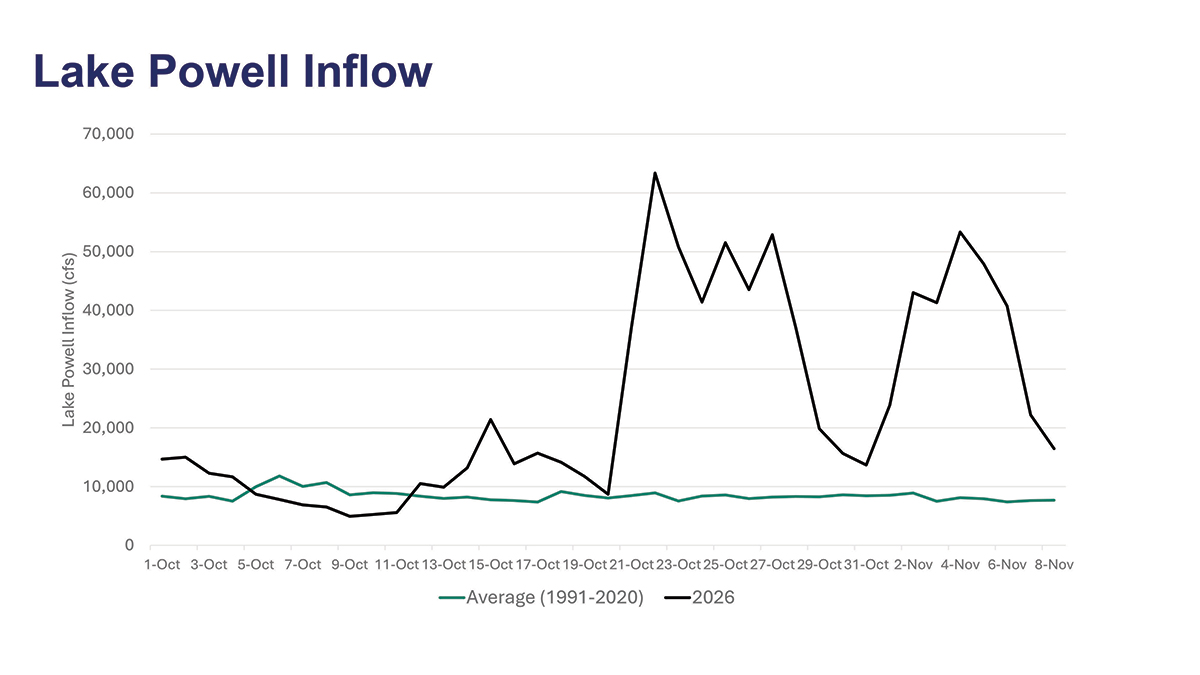
In the following graphic, you can see the average inflow into late October from 1991 through 2020 – the green line – juxtaposed with the inflow in 2026 – the black line.
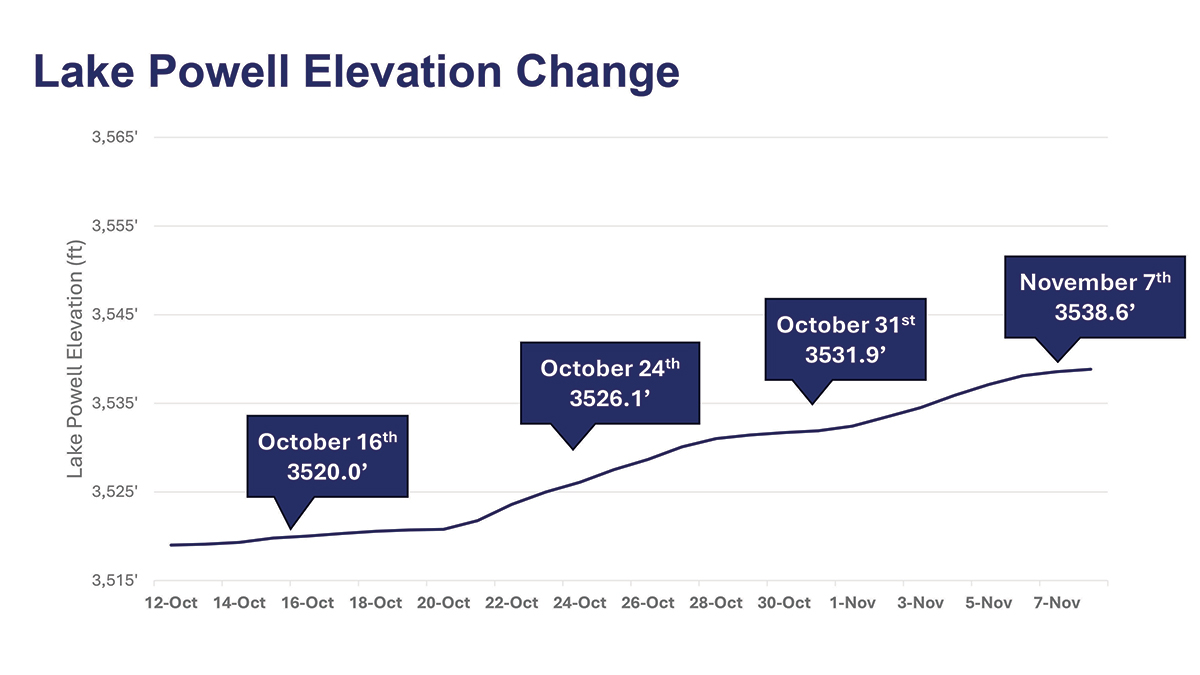
And in this graphic, you can see how that inflow translated into the level of Lake Powell:
But, while rain is always welcome in the Southwest, this significant rain event doesn’t mean as much as we in the Lower Colorado River Basin might hope.
Why? Here are three key reasons:
- Inflow to Lake Powell was significant – raising the level by 15 feet. But the lake is still lower compared to last year at this time (the lake was at 26% of capacity as of Nov. 1, 2026). For context, it would take another 160 feet to “fill” Lake Powell to elevation 3,700 ft. The increase also doesn’t change the release from Lake Powell to Lake Mead per the Colorado River Operating Guidelines, which is operating in the Low Elevation Infrastructure Protection Range for water year 2027. And the Upper Basin is still out of compliance with its 1922 Colorado River Compact obligation to send water downstream.
- Rainfall and flows into in-state rivers don’t change the amount of Colorado River that Arizona receives. Similar to the effect of monsoon rains, it just really doesn’t translate into additional water in our system. And while Lake Powell has risen, Lake Mead has not benefited in the same way, seeing a very modest two-foot increase.
- When you follow Colorado River issues, you know that snowpack is king. Super El Nino is shaping up to be significant – there’s no guarantee there will be a significant impact to the Colorado River Basin. And recovery from a decades-long drought will require more than a single storm or even a single winter. It will require several back-to-back winters of above-average snowfall in the Rockies.
All in all, in terms of the Colorado River Basin, the amount of water gained in the system thus far is really a “drop in the bucket.” But stay tuned … Super El Nino isn’t done with us yet. Let’s see what winter brings!
KRA: Water Supply
Providing a reliable CAP water supply for the short- and long-term