

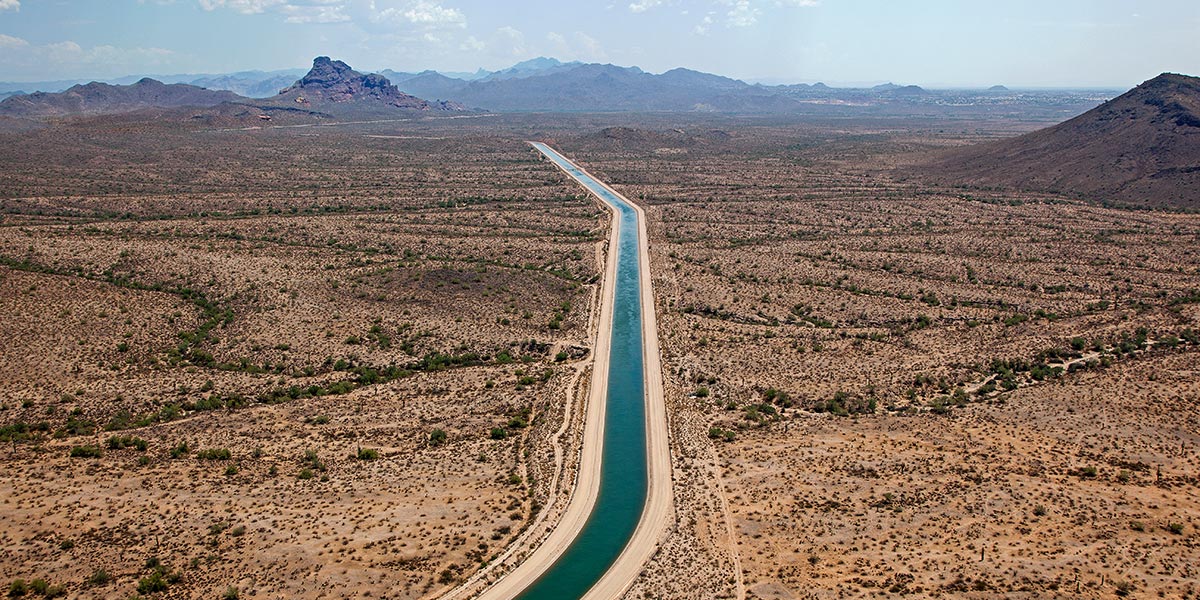
Reclamation has released a Draft Environmental Impact Statement (DEIS), a required step in the process to develop new operating guidelines for Colorado River operations by the end of the year when the current operating guidelines expire. It comes amid two-plus years of ongoing meetings and negotiations led by Reclamation working with the seven Colorado River Basin states, the Colorado River Basin tribes and other stakeholders.
The DEIS lays out five alternatives for how the Colorado River might be managed after 2026. These include one “no action” alternative required by law, three alternatives that would require agreements among the basin states, and one “no deal” alternative which may be imposed if there is no agreement among the states.
The DEIS places all the risk of a dwindling Colorado River on the Lower Basin, and all the alternatives proposed are harmful to Arizona.
The “no deal” alternative in particular piles virtually all the mandated cuts on the State of Arizona and Central Arizona Project. The DEIS ignores the obligations of the Upper Basin states to deliver water under the Colorado River Compact and the federal government to release water from the Colorado River Storage Project dams.
The “no deal” alternative would result in a crushing blow to Central Arizona’s water supply, including tribal water supplies. Millions of Arizona residents would be negatively affected – including those in the fifth largest city in the United States, as would several of the nation’s key industries, including manufacturing, microchips and national defense.
Our economy is integrated regionally and nationally, which means if Arizona is suffering, neighboring businesses and our national defense are too.
In contrast, the “no deal” alternative imposes no federal cuts to the Upper Basin and allows the Upper Basin to increase water use in the future.
Implementation of any of the DEIS alternatives would likely force Arizona to seek legal options.
The basin states and the Bureau of Reclamation can do better than any of these alternatives with a negotiated agreement. As history has shown, the Colorado River has worked best when all basin states agree on how it is managed.
We remain committed to working with the basin states and Reclamation so long as the path is toward recognizing the shared risks and responsibilities for the river and fairly sharing reductions to protect vital infrastructure that benefits the entire Colorado River Basin.
Here’s what CAWCD’s Board members have to say about the DEIS:
“Each alternative put forward places the risk of a dwindling Colorado River on the Lower Basin – none of them are good for Arizona and certainly not for Central Arizona Project. In the Lower Basin, we’ve demonstrated that we can accept that the River has less water now and likely in the future. But we cannot bear the shortage alone. The Upper Basin shows no willingness to conserve and in fact demands more water. That’s not acceptable to CAP whose millions of water users and billions in industrial investments will bear the brunt of these devastating alternatives”
– Terry Goddard, CAWCD Board President
“The alternatives laid out for post-2026 Colorado River operations are potentially disastrous for millions of Arizonans – including the residents of the fifth largest city in the United States. Further, these alternatives all negatively impact several of the nation’s key industries, including manufacturing, microchips and national defense. This means harm not just to Arizona, but to the entire country.”
– Alexandra Arboleda, CAWCD Board Vice President
“Arizonans have been smart water stewards, conserving water for decades in our desert environment. What’s more, we’ve worked with our Lower Basin partners to protect Lake Mead, by voluntarily conserving water beyond the mandatory reductions Arizona has taken for the past several years. We’ve done our part and it’s so disappointing to see alternatives that make Arizona bear the burden for all Colorado River users.”
– Karen Cesare, CAWCD Board Secretary
“Pinal County has already shouldered the brunt of the Colorado River reductions Arizona has been taking for the past several years. And this has had a monumental negative impact on our agricultural community. We’ve already felt a great deal of pain and these alternatives would be rubbing salt in the wound and would continue to devastate Arizona.”
– Stephen Miller, CAWCD Board Member, Pinal County
“CAP delivers more tribal water than any other entity in the United States. The alternatives proposed for post-2026 Colorado River operations would have a damaging effect on those deliveries, which are part of settlement agreements with the federal government. The negative effects of these alternatives impact all of CAP’s water users – cities, industries and tribes.”
– Justin Manuel, CAWCD Board Member, Pima County and member of Tohono O’Odham Nation
KRA: Water Supply
Providing a reliable CAP water supply for the short- and long-term